Why Visibility Isn't Vanity Anymore–It's Currency
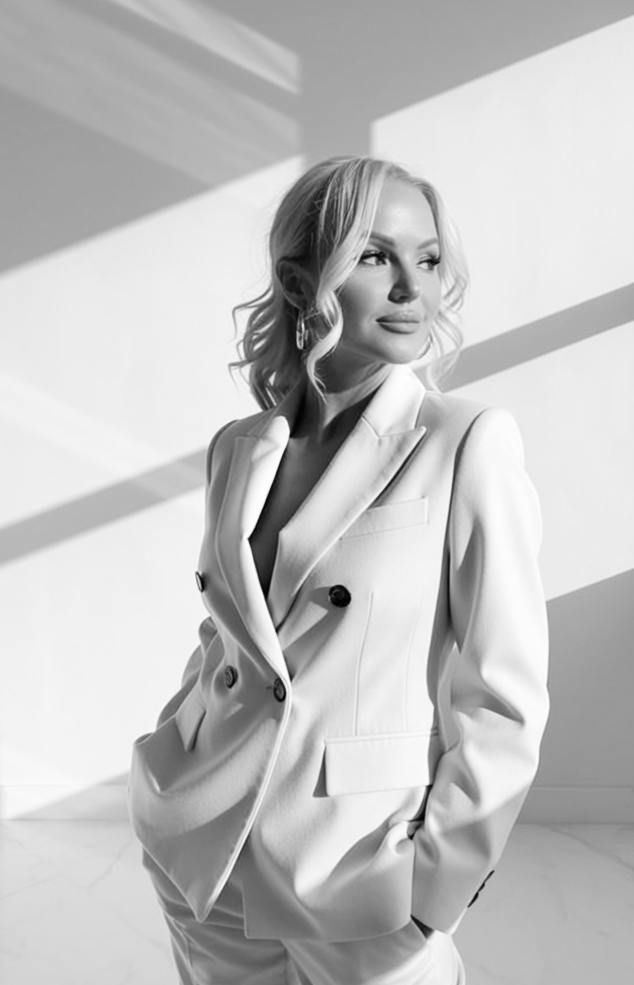
Amanda Corvelle on visibility, courage, and reinvention after 50
What if the reason you do not have the love, success, attention, or opportunity you say you want is not that you are stuck—but that getting it would require you to be fully seen?
Visibility Is More Than Being on Camera
Social media has made it possible for almost anyone to reach an audience, but it has also made visibility more emotionally complicated. Every time you open your phone, you can compare your real life with someone else’s highlight reel. You see their opportunities, income, relationships, confidence, and polished content—but not the years of discomfort, repetition, rejection, and reinvention behind the result.
That question can quietly become a reason to stay hidden.
But visibility, as Amanda and I discuss it, is not synonymous with posting constantly or performing a manufactured version of yourself. It is the ability to show up in a way that allows other people to experience you. That could mean speaking on video, attending an event, launching a dating profile, sharing your expertise, going live, asking for the opportunity, or simply letting yourself take up more space in a room.
The point is not to become louder. The point is to become available for connection.
Your Mind May Want Success Before Your Ready for It
One of the most valuable parts of the conversation is Amanda’s insistence that visibility is physical. You cannot think your way into a commanding presence while ignoring what your body is doing.
Amanda watches how people stand, sit, breathe, and speak. Are their shoulders open, or are they collapsing inward? Can they take a full breath? Does their voice have room to move, or does it tighten under pressure? When the body closes, breathing becomes shallower, cadence changes, thoughts become harder to access, and nervousness can build into a freeze response.
“You have to train your body to be seen and hold the room.” — Amanda Corvelle
This is why someone can know exactly what they want to say and still go blank when the camera turns on. The problem is not always a lack of information. Sometimes the body has simply learned that exposure feels unsafe, unfamiliar, or too demanding.
Amanda’s approach starts by treating the body and voice as instruments. Open the posture. Make room for breath. Slow down enough to maintain cadence. Stay present instead of physically retreating. These may sound like small adjustments, but they begin teaching a new lesson: being seen is something it can survive—and eventually enjoy.
Reinvention Requires a Different Kind of Courage
Amanda and I speak candidly about the freedom we had when we were younger, when we were more willing to jump before we had accumulated years of evidence about what could go wrong. That youthful energy was not necessarily confidence. Sometimes it was simply inexperience—and inexperience made movement easier.
By midlife, the stakes can feel different. Years of caring for children, partners, clients, employees, or aging parents can train people—especially women—to place their own ambitions last. Trauma, grief, heartbreak, and professional disappointment can create an understandable reluctance to risk wanting something again.
The fear is not always “What if I fail?” It may be “What if I let myself hope and get hurt again?”
That is why the episode’s message about reinvention is more meaningful than a generic instruction to leave your comfort zone. Amanda is asking people to believe in possibility after life has given them reasons to be cautious. She is asking them to revisit the things they promised themselves they would do, even if their body, habits, or identity have not caught up yet.
For me, that means moving from decades spent photographing, writing about, and elevating other people to becoming more visible as the face of my own expertise. My resistance to video is not evidence that I have nothing to say. In fact, Amanda argues that it is especially important for me to become visible because I have decades of intellectual property, insight, and experience that an audience cannot access if I stay behind the scenes.
Confidence Is Built Through Repetition, but Repetition Needs Support
Amanda draws on her background as a singer and performer when she describes courage as a muscle. You do not wait for it to appear. You strengthen it through use.
The more often you speak on camera, hold the room, share your point of view, or let people respond to your work, the less foreign the experience becomes. Repetition does more than improve technique; it gives you evidence that you can stay standing when visibility feels uncomfortable.
Yet Amanda is equally clear that repetition is difficult to sustain alone. She describes clients who wanted to quit because they disliked how they looked or felt on camera. Their breakthroughs did not happen because the fear suddenly disappeared. They happened because someone kept them in the process long enough to experience a different result.
That accountability matters. A skilled coach, collaborator, or trusted guide can see the gap between your potential and your current habits. More importantly, that person can help you cross it with a framework rather than leaving you alone with the vague advice to “be more confident.”
Courage grows when you give yourself enough time, structure, and support to discover that you are capable of more than your first uncomfortable attempt suggested.
Dating and Business Share the Same Visibility Problem
Throughout the episode, Amanda and I discuss dating, entrepreneurship, personal branding, energetic broadcasting, and social media. The underlying dynamic is the same: people need enough information to recognize and choose you.
I learned this through photography and online dating. A strong profile shapes how someone is perceived before a conversation begins. Amanda, who previously worked as a matchmaker, saw the same disconnect from another angle: people often chose photos that reflected how they had become accustomed to seeing themselves, not how they hoped to connect with someone new.
The same principle applies in business. If you want clients who value your expertise, can they see that expertise in the way you present yourself? If you want an audience to trust you, are you willing to let them hear your voice and experience your perspective? If you want a new relationship, do your images and words invite the kind of connection you say you want?
In dating and business, visibility isn't about appealing to everyone. Not everyone is your person, customer, or audience. The goal is to show up clearly enough that the right people can recognize what is distinct about you.
Your Personal Brand Is an “Energetic Broadcast”
I think deeply about personal branding because my photography helps people shape how they are seen. Amanda prefers another phrase: energetic broadcast.
The distinction matters. People often reduce a brand to a logo, color palette, website, or carefully optimized profile. Those elements can support a brand, but they are not the brand itself. Amanda describes a personal brand as the authentic frequency a person emits—the quality that makes others want to tune in, remain connected, and come back.
“Your personal brand is who you are authentically.” — Amanda Corvelle
You can't manufacture that kind of presence by copying the person who looks more successful on your feed. It becomes stronger when you stop performing what you think authority should look like and begin expressing your own experience, humor, conviction, and point of view.
Amanda compares it to a radio station. People are constantly deciding what to tune into. When your message, voice, and presence are aligned, the right audience can feel it. More importantly, you feel better because you are no longer spending energy maintaining a version of yourself that was designed for approval.
The question shifts from “Does my brand look impressive?” to “What do people experience when I show up?”
Being Seen Means Learning to Hold Attention—and Tension
Becoming visible is only the first skill. Remaining visible when people begin to react is another.
Attention creates tension. The more people who see you, the more likely you are to encounter criticism, indifference, misunderstanding, or the occasional person who finds your effort “cringe.” Amanda argues that public figures and compelling performers develop the ability to hold that tension without abandoning their message or shrinking themselves to satisfy every observer.
This is where authenticity requires strength. It is easy to say that everyone is not your person; it is harder to remember that when someone rejects, criticizes, or mocks you. But people judging from the sidelines aren't taking the same risk as the person writing the book, building the business, launching the profile, or stepping onto the stage.
The goal is not to become unaffected by all feedback. It is to build a stable enough sense of self that outside reactions do not dictate whether you continue. Visibility asks you to know what you offer, trust the value of your perspective, and let misaligned people move past you without treating their departure as proof that you should hide.
Your Next Opportunity Is Connected to Another Person
One of Amanda’s strongest reminders is that opportunity rarely arrives in isolation. A client, partner, collaborator, friend, producer, audience member, or future love interest must first encounter you before a new relationship can begin.
That is why visibility is not vanity. At its best, it is a form of participation. It puts your knowledge, personality, work, and intentions into circulation so that connection becomes possible.
The episode returns repeatedly to the enormous opportunity available through video, live content, social platforms, and in-person events. A single piece of content may reach only a few hundred people, but one aligned viewer can change the direction of a business, creative project, or personal life. The promise is not instant fame. The promise is access: people beyond your existing circle can discover that you exist.
For adults with decades of experience, staying hidden does more than limit personal opportunity. It also keeps hard-earned wisdom away from people who may genuinely need it.
Stop Waiting to Feel Like a Different Person
You do not need to become fearless before you become visible. You need to begin teaching yourself that you can be seen as the person you are now—while continuing to grow into the person you want to be.
But the deeper invitation is to stop using preparation as a hiding place. You may already have the story, experience, expertise, warmth, or perspective someone else is looking for. The missing step is letting it reach them.
Amanda’s message is both challenging and hopeful: when you're willing to show up authentically, withstand the discomfort of attention, and keep going long enough to be recognized, connection can happen in ways you couldn't have planned.
Listen to the full episode of Shot At Love featuring Amanda Corvelle for our candid conversation about visibility, stage fright, dating, video, reinvention, personal power, and what becomes possible when you finally allow yourself to be seen. To work with Amanda Corvelle, check out her latest and fabulous offers on her website, www.amandacorvelle.com.
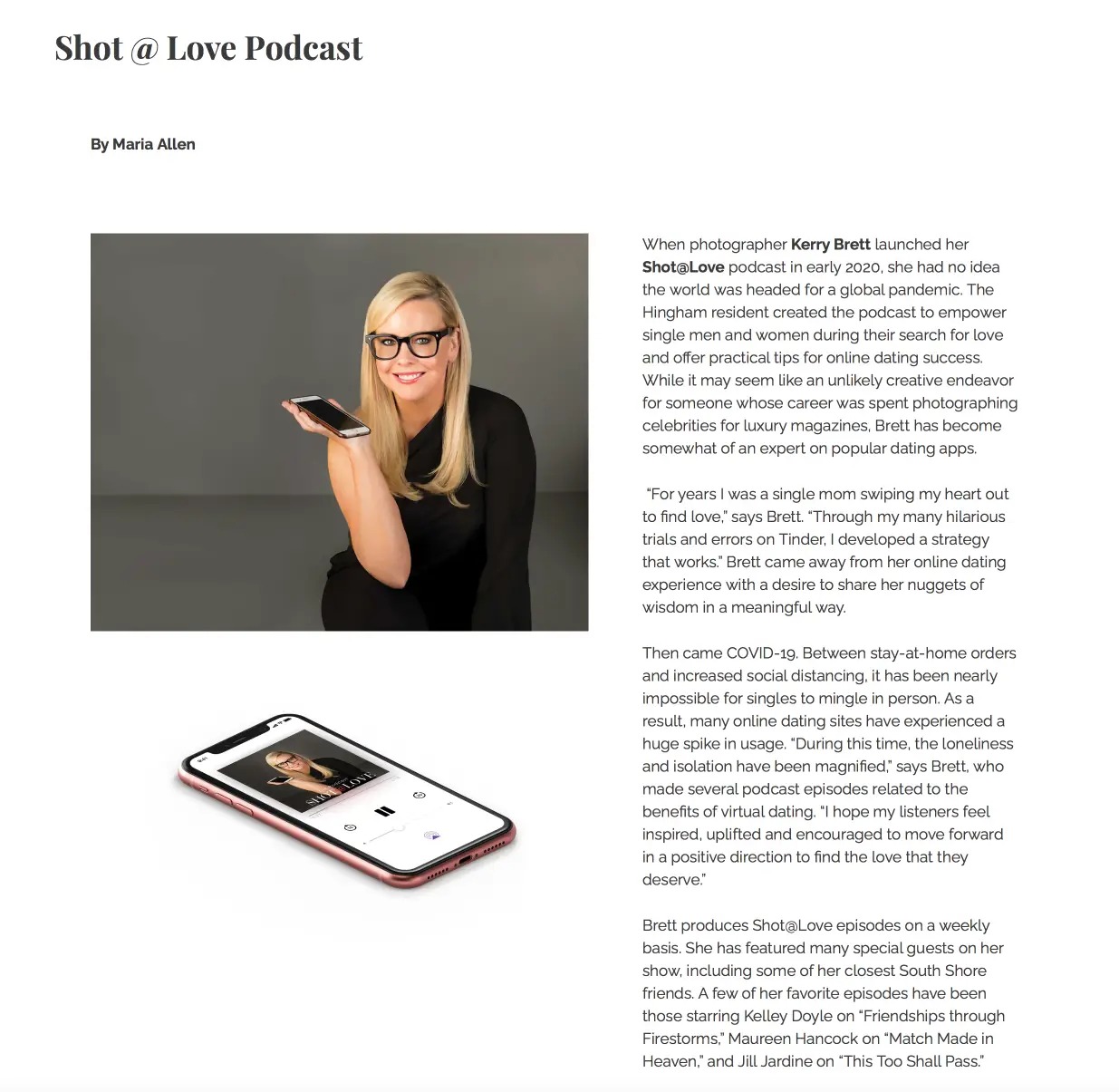
Host of Shot@Love Podcast
Kerry Brett is a Boston celebrity photographer and host of The Shot@Love Podcast, the first motivational podcast around online dating. Kerry has great empathy for single people struggling with the challenges of online dating. She understands the art and psychology around what makes a successful profile, and it all starts with the leading photograph. Kerry noticed that your online profile appearance, "your personal brand," was the key to successful dating outcomes. In 2019, she launched "The Swiping Soiree," a live seminar that taught women how to empower themselves and change their lives for the better. The Shot@Love Podcast delights and engages a larger audience helping others find love. Kerry shares her own life experiences, and her listeners laugh their way through these valuable life lessons while also being uplifted and inspired. Shot@Love was nominated for the 2021 People's Choice Podcast Awards, and Feedspot named Shot@Love #8 in the Top 20 Dating Podcasts of 2021 and 2022. In March of 2022, Shot@Love joined the airwaves on iHeart Radio Live on Power Me Up Radio Talk 24/7, the station with heart on iHeart five days a week on Tuesday through Saturday at 5:30 PM (EST). Shot@Love is available on Apple Podcast and all other major platforms.
How to Swipe Like a Guy: Dating App Strategy for High Standards